LKY’s DeepSolv Rice University program expanded and accelerated
Our Investment Locksley Resources (ASX: LKY) just announced an update on its DeepSolv technology program.
LKY holds ground in and around the $18BN MP Materials’ Mountain Pass mine in California.
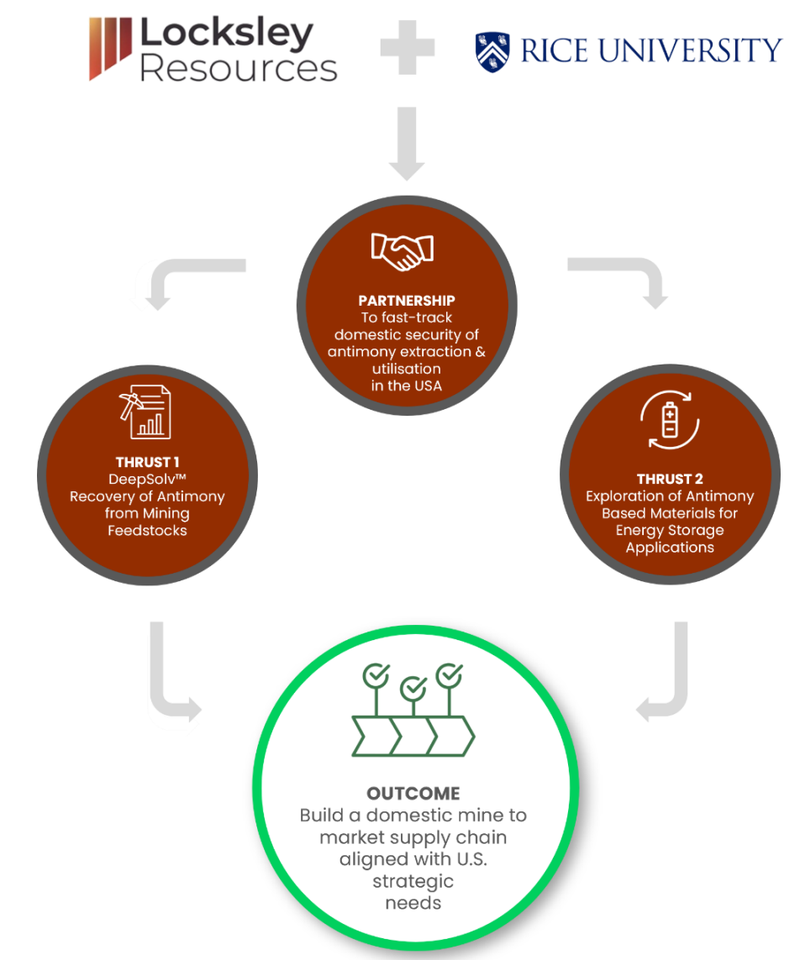
Today LKY has announced that its DeepSolv technology program to process North American antimony ore at Rice University has been expanded and accelerated.
(Source)
LKY is aiming to rapidly address the growing demand for US antimony processing independence.
We covered the beginning of this collaboration here: LKY: Fast tracking USA antimony mining AND now antimony processing too?
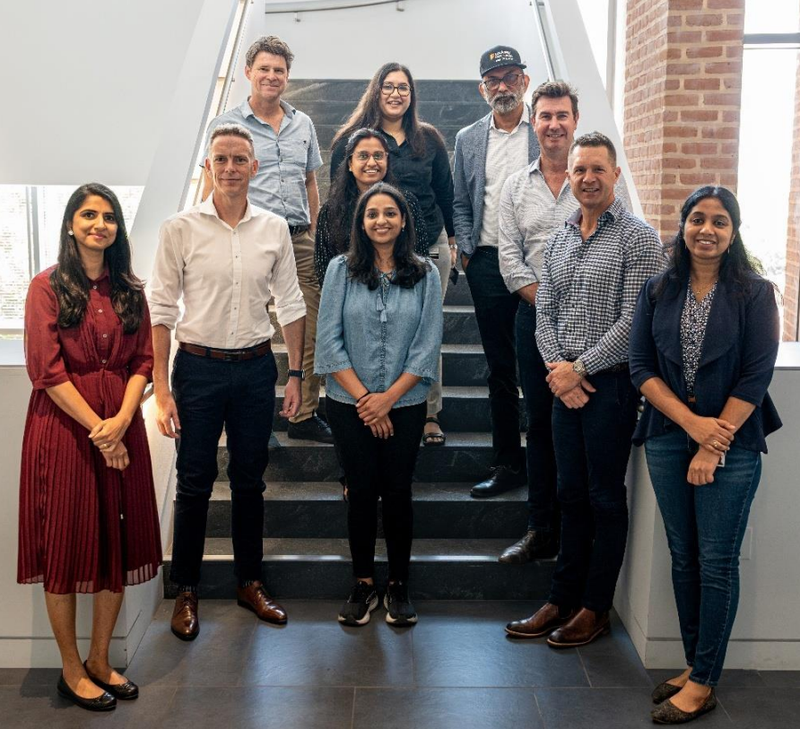
LKY has just completed a visit to Rice University where it has been formalising their research collaboration and the expansion of the DeepSolv program.
The visit included meeting with professor Pulickel Ajayan and members of his laboratory team plus the senior Rice University administrators including the Executive Vice President for Research and the Office of Technology Transfer and representatives from Rice University Public Affairs.
(Source)
This was followed by a dedicated project workshop with the Ajayan group to further lay the groundwork for the program.
This expanded program will include the testing of multiple antimony feedstocks from various sources, including LKY’s Mojave project, EV resources and additional 3rd party samples.
Also mentioned today was discussions being underway with an additional mining group to further evaluate the DeepSolv technology.
The company's focus for this is to provide local antimony processing within the US to address a $1.5BN domestic market that has been created with China’s reduction of antimony exports.
This program expansion and acceleration is a significant step in LKY’s strategy for localised supply of antimony.
By accelerating the testwork program and incorporating additional ore supplies, LKY is emerging as a key player in the development of a secure domestic supply chain.
Which is well aligned with the US government's priorities for local critical mineral development, a theme we have been hot on for a while now.
What’s next for LKY?
Drilling (next quarter) 🔄
LKY expects drilling to start this quarter, with first results expected before the end of this year. (Source)
Right now LKY is waiting for its expanded Plan of Operations (“POO”) to be approved (which is LKY expanding the size of its currently permitted drill program).
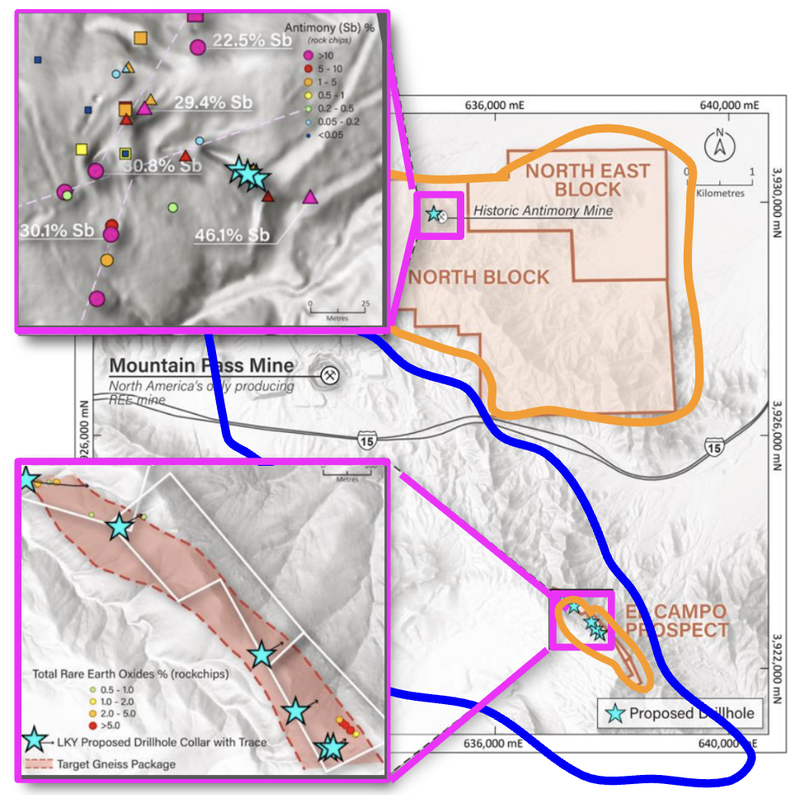
Here is where LKY’s initial drilling program is scheduled:
(Source)
With the rare earths drill program, LKY plans to test areas where a number of high grade rock chip samples were found, grading 1.20% to 6.87% TREO (rare earths).
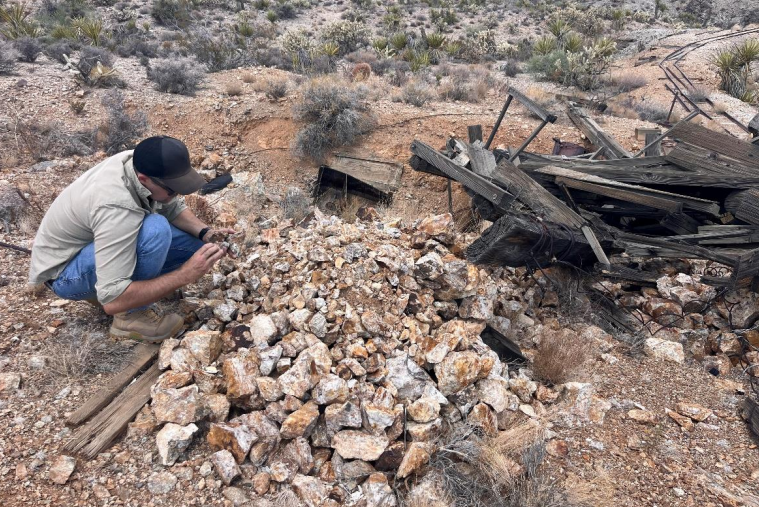
With the antimony drill program, LKY plans to test for the extent of mineralisation near the historical antimony mine.
Permitting for phase two drilling 🔄
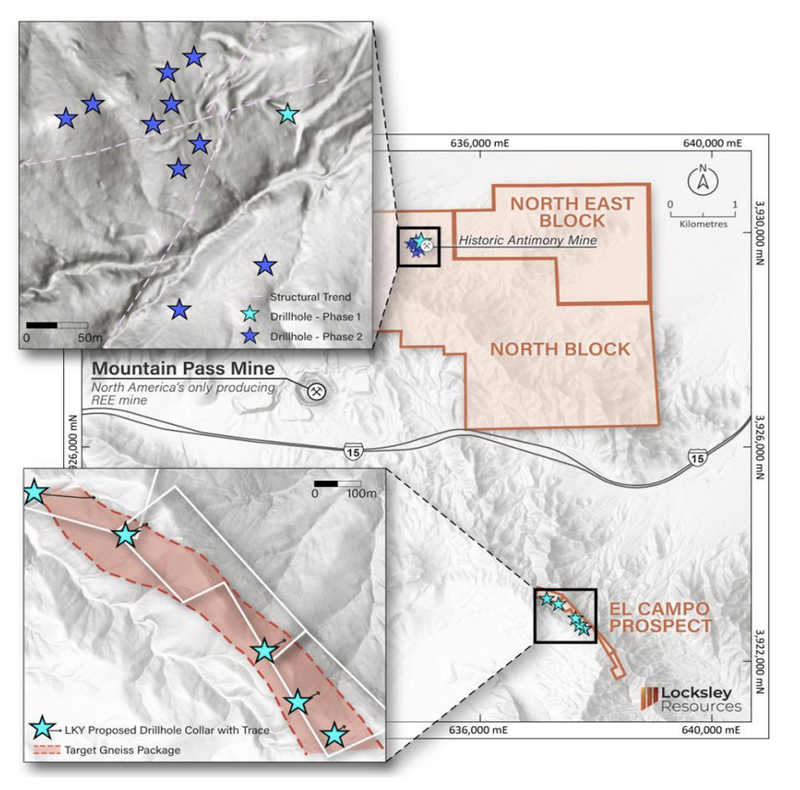
LKY has lodged permits for an expanded Phase two drilling program on the North Block.
In the map below:
- Light blue stars = phase 1 drill program (fully permitted)
- Dark blue stars = phase 2 drill holes (permit pending)
Secure licence agreement with Rice University 🔄
Now that LKY has signed a partnership agreement with Rice University, the next stage will be to secure a larger licence deal over whatever technology is developed from the R&D agreement.
This will take some time to work out the IP sharing and mutual development of the technology.
Updates on potential funding opportunities🔄
With LKY’s appointment of GreenMet we would like to see progress on US funding pathways.
Identify rare earth targets on the northern blocks 🔄
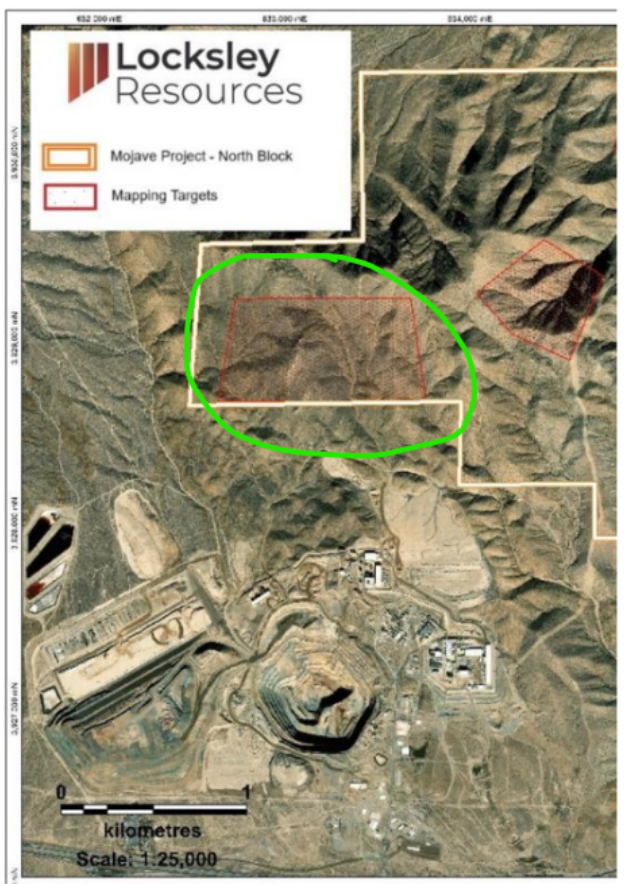
LKY is now trying to work up some rare earth targets on the much larger blocks to the north, two of them as close as possible to MP Materials’ mine.
(Source)
LKY will run structural and geological mapping, plus geophysics programmes on the areas shown above (we circled them in green).
Hopefully we get to see some nice looking rock chip samples as part of this field work too.
(Source)